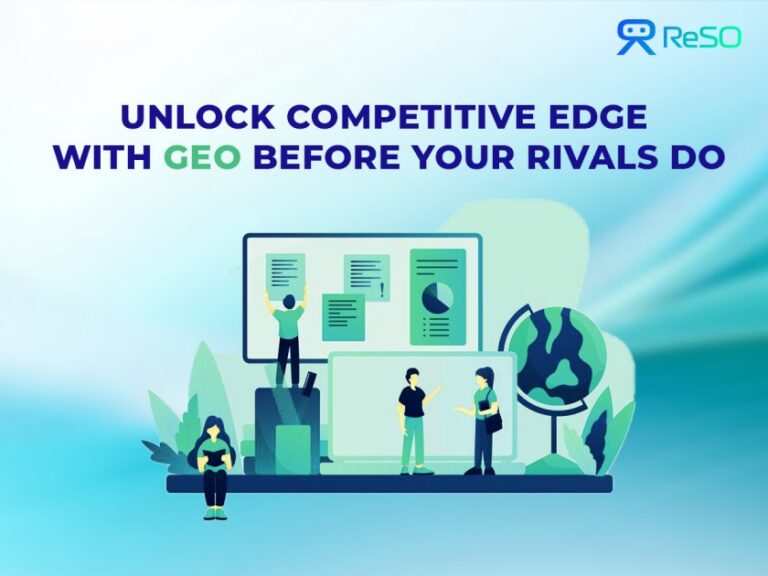
You ask a question, and an AI instantly serves up the perfect answer, no endless scrolling needed. That’s the power of Generative Engine Optimization, or GEO, coming to the forefront.
It’s not your usual SEO game; so, what exactly is GEO?
It’s about making your content pop on AI engines like ChatGPT, Perplexity, and Bing AI by focusing on things like LLM mention tracking, entity consistency, and using structured data for AI. These models don’t just scan for keywords; they track conversational intent and prompt ranking to decide what shows up.
Why care now?
Because Perplexity, ChatGPT, and Bing AI are becoming the new gatekeepers. They choose what content gets featured in their AI Overviews appearance by looking for clean, structured info and trusted brands. Ignore GEO, and you risk fading into digital obscurity as search shifts from traditional keywords to smart conversations.
Reason 1: Instant Relevance Through Conversational Queries
When someone asks ChatGPT or Perplexity a real question with background details, these AI systems don’t just scan for matching words. They dig into the conversational intent tracking, understanding not just what you’re asking, but why you’re asking it.
Research shows traditional Google searches average just 4.2 words, while ChatGPT prompts contain around 23 words packed with context.
Traditional SEO? It’s still playing the old keyword matching game. Your content gets ranked based on how many times you stuff “best pizza” into your headings and meta tags.
However, generative search ranking works differently. The AI looks for entity consistency and structured data for AI, like FAQ schema and HowTo schema, in JSON-LD format to understand your content’s true meaning.
Smart brands focus on prompt ranking by creating content that genuinely answers the complex, conversational questions real humans ask. That’s how you land in those coveted AI Overviews appearances where your brand becomes part of the answer itself.
Reason 2: Enhanced Brand Authority via AI Citations
Generative AI models don’t just guess answers; they pull from trusted sources and brand mentions to build credibility. Here’s how brands win big with AI citations:
- AI Overviews Appearances: When ChatGPT, Bing AI, or Perplexity answer questions, they often cite sources. If your brand is recognized and mentioned alongside authoritative content, AI models are more likely to highlight your info.
- LLM Mention Tracking: Keeping tabs on how your brand is referenced across content feeds these models with signals that boost your authority in generative search rankings.
- Entity Consistency Matters: Consistent, clear mentions of your brand and related entities help AI confidently connect your content to relevant queries.
- Boosts Brand Credibility: When AI can accurately cite you as a trusted source, it increases your brand’s authority and visibility within conversational search prompts.
Focus on these points, and your brand won’t just appear in AI answers; it’ll be the trusted voice behind them.
Reason 3: Expanded Reach on Alternative Search Platforms
Your future customers aren’t just typing “CRM software” into Google anymore. They’re asking ChatGPT things like:
- “What’s the best CRM for a 20-person sales team that already uses HubSpot for marketing?”
- “Compare SaaS onboarding platforms that integrate with Slack and Jira.”
- “Show me customer support software with AI ticket routing and transparent pricing.”
That’s not keyword search. That’s conversational search. And if your SaaS brand isn’t optimized for those kinds of queries, you’ll get ghosted by the AI engines that are increasingly shaping B2B buying journeys.
Let’s break down the platforms:
- Google: Still useful for bottom-of-funnel searches like “demo booking software pricing.” However, here, it’s mostly ads and SEO battles.
- ChatGPT: This is where decision-makers and consultants go for context-packed answers. They want clarity, not 20 tabs. If your SaaS content answers the “what, why, and how” clearly, ChatGPT will pull you into its answers.
- Perplexity: Think due diligence. IT leaders, analysts, or procurement folks who need trusted, cited sources lean here. If your case studies, whitepapers, or product pages have structured data and clear citations, Perplexity will put your brand in the conversation.
Reason 4: Data-Driven Content Iteration for Generative Engines
You wouldn’t launch a product without testing it, so why treat your content like one-and-done? Generative engines give you real-time insights on what resonates.
Here’s how to iterate like a pro:
- First, tune your tone and structure based on AI feedback. Monitor LLM mention tracking dashboards to see which sections get picked up in snippets or AI Overviews. If your conversational intros aren’t making the cut, tweak them to match the voice your audience uses in their prompts.
- Next, run A/B tests on titles and intros right inside generative search previews. Create two versions, one punchy, one descriptive, and feed them through ChatGPT or Perplexity’s preview modes. Check which prompt ranking lifts higher or gets more citations in test queries.
- Finally, lean on analytics to guide each tweak. Track conversational intent metrics and prompt performance over time. That way, every edit you make isn’t a guess; it’s backed by hard data from the very AI engines you’re optimizing for.
This isn’t about ranking higher on Google; it’s about shaping your content in cycles, based on how generative engines actually use it.
Reason 5: Future-Proofing Your SEO Strategy
The AI search world keeps evolving, voice, images, and even video clips are becoming part of queries. To stay ahead, you need an AI-ready content architecture that’s flexible and forward-looking:
| Emerging Trend | What It Means for Your Content |
| Voice + Image Queries | Users will ask “Show me examples of…” or speak their requests aloud. Optimize by adding alt text, captions, and audio transcripts tied to conversational search prompts. |
| Multi-Modal AI Search | AI engines will blend text, visuals, and voice into single answers. Build content hubs that mix blog posts with infographics, video snippets, and image galleries tagged with structured data for AI. |
| Visual Entity Recognition | AI can “see” and identify objects in images. Use clear, consistent entity labels in captions and JSON-LD to ensure your visuals get cited in AI Overviews appearances. |
Beyond trends, build an AI-ready content architecture by:
- Creating modular content blocks: Write concise answer snippets that can be mixed and matched across formats, text, images, voice scripts, and videos.
- Mapping content to prompts: Develop a living “prompt library” that pairs user conversational search prompts with your best-performing content snippets, ready to feed into any generative engine.
With these steps, you’re not just optimizing for today’s GEO demands; you’re laying the groundwork for whatever AI search throws at you next.
Integrating GEO into Cross-Functional Workflows
Stop thinking of GEO as just another marketing task. Smart companies are weaving generative search optimization into how every department operates, and the results are game-changing. Here’s how each team becomes part of your GEO powerhouse:
Content Teams + Analytics = Topic Gold
Your content crew works directly with data teams to spot trending conversational queries before competitors catch on. Every blog post, video, or guide gets shaped by real prompt data, not guesswork.
Product Teams Mine Support Gold
Product managers dig into actual user questions from help desk tickets and chatbot logs. They use these authentic conversational search prompts to rewrite feature docs and in-app help so AI engines can easily surface them when users ask similar questions.
Sales Teams Talk Like Humans
Sales reps get AI-powered customer pain point summaries that read like real conversations, not corporate jargon. Their outreach emails mirror the natural language style that generative engines love and prospects actually respond to.
Customer Success Builds Answer Libraries
CS teams create FAQ databases and tutorial scripts mapped directly to how people actually ask questions, whether typing or talking. This increases your chances of popping up in voice searches and multi-modal AI responses.
The real magic kicks in when insights flow freely across departments: product teams surface genuine user queries, content teams turn them into authentic, prompt-ready content, and sales speak the same conversational language that ranks high in AI Overviews. What are you waiting for? Let’s build an AI-ready playbook that scales as you grow. Book a call with ReSO to embed generative search optimization into every corner of your GTM motion and start transforming your search visibility.
Frequently Asked Questions
1. Why are AI engines like ChatGPT, Perplexity, and Bing AI becoming the new search gatekeepers?
AI engines like ChatGPT, Perplexity, and Bing AI are becoming the new search gatekeepers because they sit directly between users and information. Instead of presenting lists of links, they interpret intent, synthesize answers, and decide which sources are shown or cited. This shifts control from rankings to inclusion, making AI systems the primary curators of what users see and trust.
2. How do conversational queries change how content is discovered in AI search?
Conversational queries change content discovery by shifting search from keywords to intent and context. AI engines break long, detailed questions into multiple related searches, then select content that clearly answers the underlying problem. Pages written to address real questions in natural language are more likely to be surfaced and cited than keyword-optimized pages.
3. Why do AI citations and LLM mentions matter more than rankings and clicks?
AI citations and LLM mentions matter more than rankings and clicks because AI-driven search often delivers answers without requiring users to visit websites. When an AI assistant cites or mentions a brand, it directly influences trust, recall, and buying decisions.
4. What role do structured data and entity consistency play in GEO success?
Structured data and entity consistency help AI engines understand exactly what your content represents and when it should be used. Schema markup clarifies facts, relationships, and answers, while consistent entity naming builds recognition and trust. Together, they reduce ambiguity, making it easier for AI systems to confidently select and cite your content.
5. How does Generative Engine Optimization future-proof a brand’s search strategy?
GEO future-proofs a brand’s search strategy by preparing content for how AI systems discover, interpret, and present information. By focusing on conversational intent, structured answers, and consistent entities, a brand remains visible as search shifts from link-based results to AI-generated responses across text, voice, and multimodal platforms.